
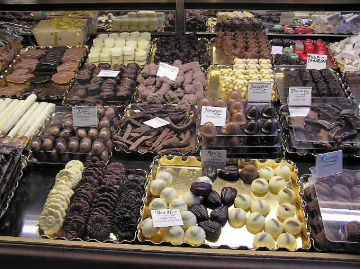
I have had the pleasure of tasting Belgian chocolate, renowned as some of the finest in the world. Crafted with genuine cocoa butter, it boasts a lusciously creamy flavor and a remarkably smooth texture that effortlessly dissolves on the palate.
Once the cocoa beans complete their drying process and depart from their originating farms, they embark on a journey to the factories where they will be transformed into delectable chocolates. Here, the beans undergo roasting and grinding. This crucial roasting phase triggers a series of chemical reactions that collaborate to bestow upon the delightful confection its distinctive taste and aroma. Subsequently, a device known as a winnower cracks and liberates the beans from their shells.
These deshelled cocoa beans, often referred to as "nibs," are ground into a dense paste known as chocolate liquor. This liquor is then subjected to pressing to separate the coveted cocoa butter, resulting in a residue that can be further ground into cocoa powder.
While numerous chocolate producers beyond Belgium may acquire chocolate liquor from various sources to fashion their creations, for a product to bear the coveted label of Belgian chocolate, it must undergo full refinement and molding within the borders of Belgium. The refinement process in Belgian chocolate is a meticulous one, involving the precise grinding of sugar and cocoa particles to yield a sumptuously smooth, velvety texture that caresses the palate.


.jpeg&w=1080&q=75)