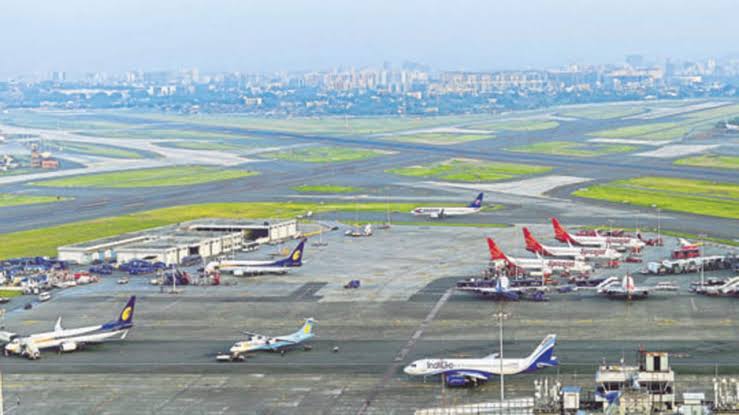
As of 2026, Mumbai has two commercial airports serving the Mumbai Metropolitan Region. These are:
-
Chhatrapati Shivaji Maharaj International Airport (CSMIA) – Mumbai's primary airport.
-
Navi Mumbai International Airport (NMIA) – Mumbai's second international airport, which began commercial operations in late 2025 and is gradually expanding its domestic and international services.
For many years, people associated Mumbai with just one airport because CSMIA handled almost all passenger traffic. However, with air travel growing rapidly, the city now officially operates a two-airport system to reduce congestion and improve connectivity.
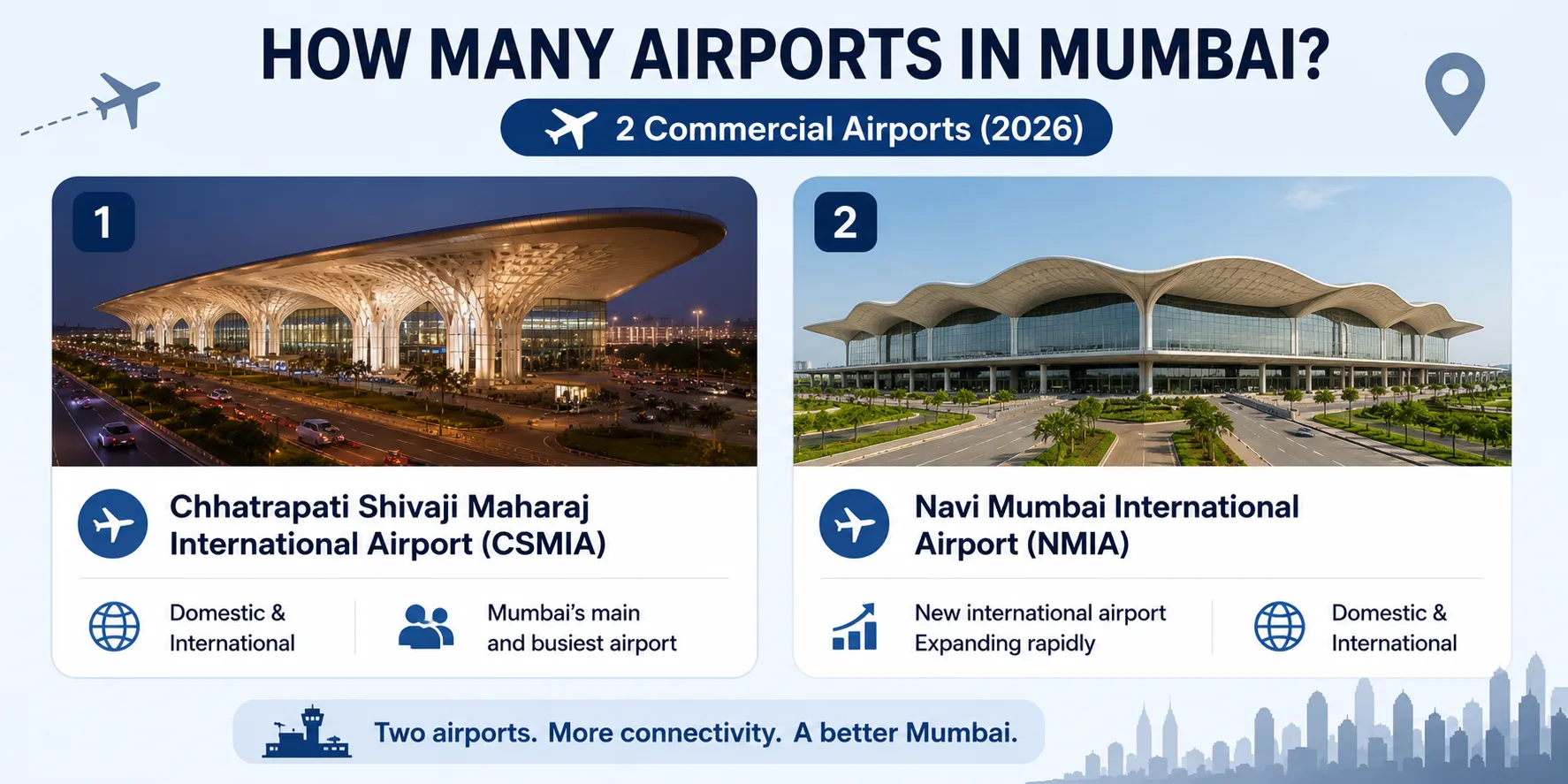
Complete List of Airports Serving Mumbai
1. Chhatrapati Shivaji Maharaj International Airport (CSMIA)
This is Mumbai's main airport and one of the busiest airports in India.
It handles:
-
Domestic flights.
-
International flights.
-
Cargo operations.
-
Millions of passengers every year.
Located in Andheri, it has been Mumbai's primary aviation hub for decades and continues to connect the city with destinations across the world.
2. Navi Mumbai International Airport (NMIA)
Navi Mumbai International Airport is Mumbai's newest airport.
It was developed to support the increasing number of passengers that the existing airport could no longer comfortably accommodate.
The airport is gradually expanding its flight network and is expected to become one of India's largest aviation hubs over the coming years. International operations are also being added in phases.
What Is the Purpose of Each Airport?
Although both airports serve Mumbai, their roles are slightly different.
| Airport | Main Purpose |
|---|---|
| Chhatrapati Shivaji Maharaj International Airport (CSMIA) | Primary airport handling domestic and international flights |
| Navi Mumbai International Airport (NMIA) | Reduce congestion, increase passenger capacity, and support future aviation growth |
Together, these airports help improve flight availability, reduce delays, and strengthen Mumbai's position as one of India's largest aviation hubs.
Why Does Mumbai Have Two Airports?
Mumbai is one of India's busiest cities for both business and tourism.
Over the years, passenger traffic increased so much that expanding the existing airport alone wasn't enough.
The second airport was developed to:
-
Reduce congestion at CSMIA.
-
Handle future passenger growth.
-
Improve domestic and international connectivity.
-
Support cargo operations.
-
Strengthen regional economic development.
With two operational airports, Mumbai can now accommodate significantly more passengers than before.
Will Mumbai Get More Airports?
At present, Mumbai is officially served by two commercial airports.
Instead of building another major airport immediately, the focus is on expanding the capacity of Navi Mumbai International Airport through multiple development phases.
Once fully completed, NMIA is expected to handle up to 90 million passengers annually, making it one of India's largest airports.
Mumbai Airports at a Glance
| Feature | Details |
|---|---|
| Current Number of Commercial Airports | 2 |
| Primary Airport | Chhatrapati Shivaji Maharaj International Airport |
| Second Airport | Navi Mumbai International Airport |
| Handles International Flights | Both (with NMIA expanding international operations) |
| Reason for Second Airport | Reduce congestion and support future growth |
Mumbai currently has two commercial airports serving its metropolitan region. While Chhatrapati Shivaji Maharaj International Airport remains the city's primary aviation gateway, Navi Mumbai International Airport has significantly expanded Mumbai's capacity for future air travel. Together, these two airports are helping meet the growing demand for domestic and international connectivity while supporting the city's long-term economic and infrastructure development.
Frequently Asked Questions (FAQs)
1. How many international airports are there in Mumbai?
As of 2026, Mumbai is served by two international airports: Chhatrapati Shivaji Maharaj International Airport (CSMIA) and Navi Mumbai International Airport (NMIA), with NMIA progressively expanding its international flight operations.
2. What is the main airport in Mumbai?
The primary airport is Chhatrapati Shivaji Maharaj International Airport (CSMIA), located in Andheri. It remains one of India's busiest airports for both domestic and international travel.
3. Why was Navi Mumbai International Airport built?
It was developed to reduce congestion at Mumbai's existing airport, accommodate increasing passenger traffic, improve connectivity, and support future aviation growth.
4. Is Navi Mumbai Airport fully operational?
Yes. Navi Mumbai International Airport began commercial operations in December 2025 and is gradually expanding its domestic and international services.
5. Which airport should I choose when flying to Mumbai?
It depends on your airline and destination. Many airlines continue to operate from CSMIA, while an increasing number of domestic and international flights are being scheduled from Navi Mumbai International Airport as its operations expand.
Must Read: How many Airport are there in Delhi?