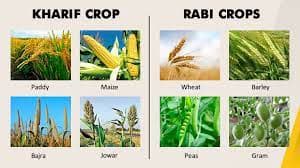
Rabi and Kharif are the two main cropping seasons in India. The difference between them is based on when the crops are sown and harvested, as well as the weather conditions they require. Rabi crops are grown during the winter season, while Kharif crops are cultivated during the monsoon season.
I grew up hearing farmers and news channels frequently mention Rabi and Kharif crops, especially around the Union Budget and monsoon forecasts. For a long time, they sounded like complicated agricultural terms. Once I understood that they simply represent two different farming seasons, everything became much easier to follow, from crop prices to rainfall updates and food production reports.
What Are Rabi Crops?
Rabi crops are planted after the monsoon ends, usually between October and December, and are harvested from March to April.
These crops grow best in:
-
Cool weather during the growing stage.
-
Dry and warm weather during harvesting.
-
Moderate irrigation where rainfall is limited.
Some common Rabi crops include:
-
Wheat.
-
Barley.
-
Mustard.
-
Gram (chickpea).
-
Peas.
-
Oats.
Rabi farming is especially important in northern India, where cool winters create ideal growing conditions.
What Are Kharif Crops?
Kharif crops are sown with the arrival of the southwest monsoon, generally between June and July, and harvested from September to October.
These crops require:
-
Warm temperatures.
-
High humidity.
-
Good rainfall.
Common Kharif crops include:
-
Rice.
-
Maize.
-
Cotton.
-
Soybean.
-
Groundnut.
-
Bajra.
-
Jowar.
-
Sugarcane (grown over a longer duration in many regions).
A healthy monsoon is one of the biggest factors influencing Kharif production, which is why rainfall forecasts receive so much attention every year.
Rabi vs Kharif Crops
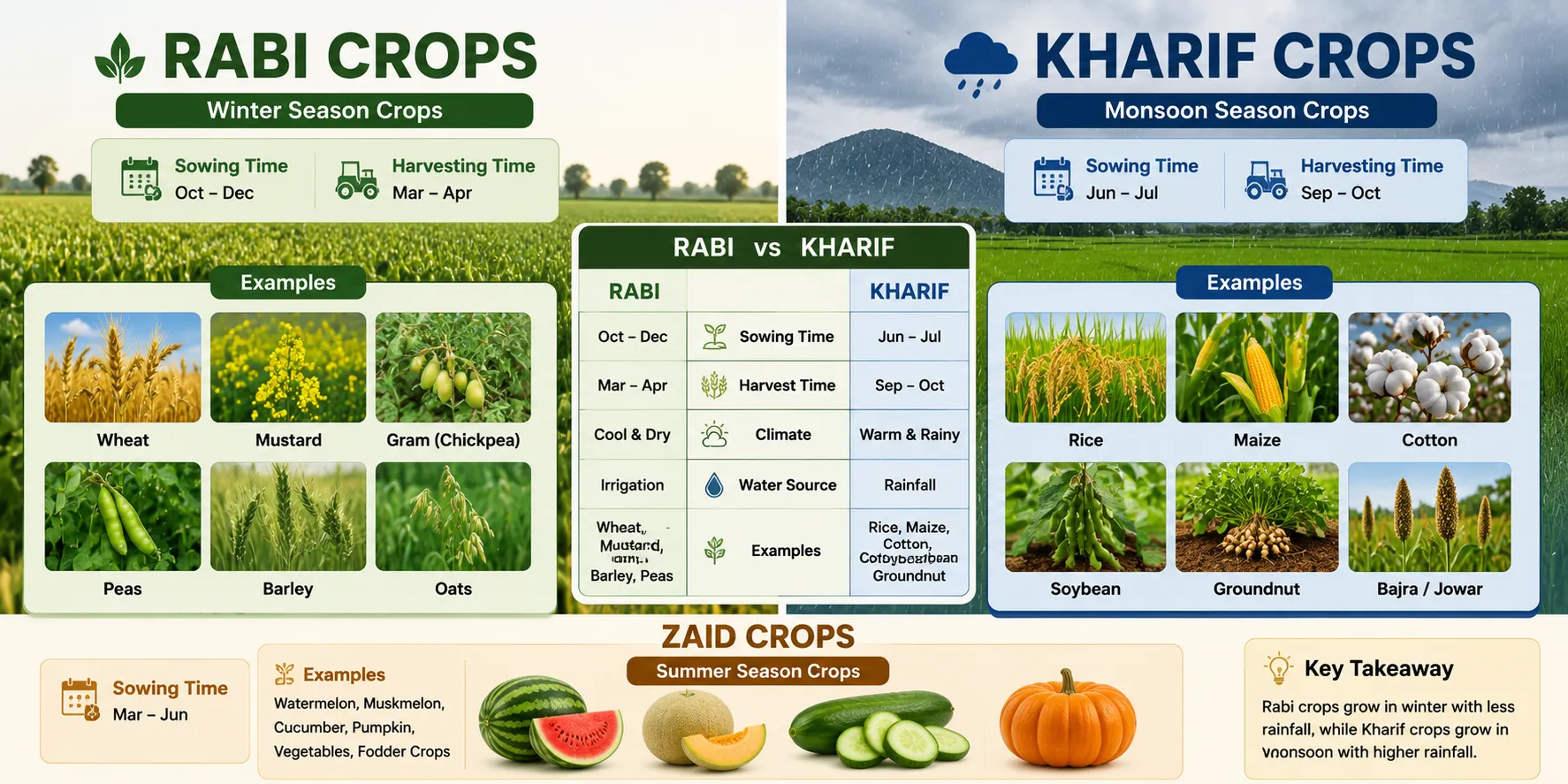
| Feature | Rabi Crops | Kharif Crops |
|---|---|---|
| Sowing Season | October–December | June–July |
| Harvest Season | March–April | September–October |
| Climate Needed | Cool and dry | Warm and rainy |
| Main Water Source | Irrigation + winter rainfall | Monsoon rainfall |
| Examples | Wheat, mustard, gram | Rice, maize, cotton |
The easiest way to remember them is:
-
Rabi = Winter crops
-
Kharif = Monsoon crops
What Are Zaid Crops?
Along with Rabi and Kharif, India also has a third cropping season known as Zaid.
Zaid crops are grown during the short period between the Rabi and Kharif seasons, usually from March to June.
Examples include:
-
Watermelon.
-
Muskmelon.
-
Cucumber.
-
Pumpkin.
-
Some vegetables and fodder crops.
Although Zaid receives less attention, it plays an important role in improving farmers' income and making better use of agricultural land throughout the year.
Why Are Rabi and Kharif Crops Important?
These two cropping seasons form the backbone of Indian agriculture.
They are important because they:
-
Ensure year-round food production.
-
Support millions of farmers.
-
Contribute significantly to India's economy.
-
Help maintain food security.
-
Supply raw materials to industries such as textiles, food processing, and edible oils.
One insight that often gets overlooked is that India's food prices are closely linked to these crop seasons. If monsoon rainfall is weak, Kharif production may decline, which can eventually affect the prices of rice, pulses, vegetables, and edible oils. Similarly, winter weather influences Rabi yields, particularly wheat and mustard.
What Factors Affect Rabi and Kharif Crops?
Several factors determine the success of both crop seasons.
These include:
-
Rainfall and monsoon performance.
-
Temperature.
-
Soil fertility.
-
Irrigation facilities.
-
Availability of quality seeds.
-
Fertilizer use.
-
Pest and disease management.
-
Government agricultural policies.
Modern technologies such as weather forecasting, drip irrigation, improved seed varieties, and precision farming are also helping farmers improve productivity across both seasons.
Rabi and Kharif Crops at a Glance
| Feature | Rabi | Kharif |
|---|---|---|
| Growing Season | Winter | Monsoon |
| Sowing Time | October–December | June–July |
| Harvest Time | March–April | September–October |
| Major Crops | Wheat, barley, mustard, gram | Rice, maize, cotton, soybean |
| Main Water Source | Irrigation | Rainfall |
Rabi and Kharif crops represent the two primary agricultural seasons that sustain India's food production system. While Rabi crops thrive in cooler winter conditions, Kharif crops depend heavily on the monsoon rains. Understanding the difference between these seasons not only helps explain how farming works in India but also makes it easier to understand news related to agriculture, food prices, monsoons, and the overall economy.
Frequently Asked Questions (FAQs)
1. What is the main difference between Rabi and Kharif crops?
The main difference is their growing season. Rabi crops are sown in winter and harvested in spring, while Kharif crops are sown during the monsoon and harvested in autumn.
2. Which crops are examples of Rabi crops?
Some common Rabi crops include wheat, barley, mustard, gram, peas, and oats.
3. Which crops are grown during the Kharif season?
Popular Kharif crops include rice, maize, cotton, soybean, bajra, jowar, and groundnut.
4. What are Zaid crops?
Zaid crops are grown between the Rabi and Kharif seasons, usually from March to June. Examples include watermelon, muskmelon, cucumber, and various vegetables.
5. Why is the monsoon important for Kharif crops?
Most Kharif crops rely heavily on monsoon rainfall for their growth. Good rainfall generally leads to better crop yields, while weak or delayed monsoons can reduce agricultural production.
Must Read: Name the important crops of southern europe