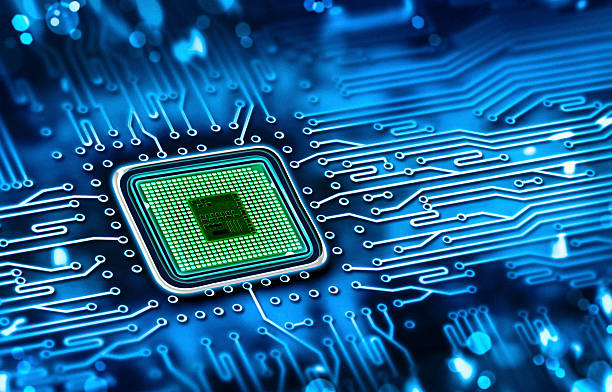
A computer chip, also known as a microchip or integrated circuit (IC), is a small electronic component made primarily from silicon that contains millions or even billions of tiny transistors. It processes information, performs calculations, stores data, and controls how electronic devices function.
Most of us use smartphones, laptops, and computers every single day, but we rarely think about what's happening inside them. At the heart of almost every modern electronic device is a tiny computer chip that acts like the brain behind all the operations.
How Does a Computer Chip Work?
A computer chip works by processing electrical signals.
Inside the chip are millions or even billions of tiny transistors that act like microscopic switches. These switches turn on and off billions of times every second, allowing the chip to perform calculations, execute instructions, and process data almost instantly.
The faster and more advanced the chip, the quicker your device can complete tasks.
Why Is It Used?
Computer chips are essential because they control almost every function in an electronic device.
They help devices:
-
Process information.
-
Run software and applications.
-
Store and retrieve data.
-
Connect to the internet.
-
Perform calculations.
-
Manage communication between hardware components.
Without computer chips, modern electronics simply wouldn't function.
Imagine you're opening a web browser on your laptop.
Within a few seconds, your computer loads the operating system, opens the browser, connects to the internet, displays the webpage, and responds to every click you make.
All of these tasks are coordinated by different computer chips working together behind the scenes, often in just a fraction of a second.
Types of Computer Chips
Different chips perform different jobs, including:
-
CPU (Central Processing Unit) – Executes instructions and performs calculations.
-
GPU (Graphics Processing Unit) – Handles graphics, gaming, and video processing.
-
Memory Chips (RAM) – Temporarily store data while programs are running.
-
Storage Chips – Store files and operating systems in SSDs and other storage devices.
Each chip has a specific role in helping the device operate efficiently.
Advantages & Limitations
Advantages
-
Extremely fast processing.
-
Compact size.
-
Energy efficient.
-
Reliable and accurate.
-
Power almost every modern electronic device.
Limitations
-
Can overheat under heavy workloads.
-
Difficult to repair once damaged.
-
Performance depends on design and manufacturing technology.
Computer Chip vs Processor
People often use these terms interchangeably, but they're not exactly the same.
A computer chip is a general term for an integrated circuit.
A processor (CPU) is one specific type of computer chip responsible for executing instructions and managing most computing tasks.
In simple words, every processor is a computer chip, but not every computer chip is a processor.
Computer Chip at a Glance
| Feature | Details |
|---|---|
| Also Called | Microchip or Integrated Circuit (IC) |
| Material | Primarily silicon |
| Main Function | Process and control electronic operations |
| Found In | Computers, smartphones, TVs, cars, smart devices |
| Contains | Millions or billions of transistors |
| Main Benefit | Enables modern electronic devices to function |
Must Read: Can computers keep getting faster?