The old name of Kolkata was Calcutta. The city was officially known as Calcutta during British rule and for several decades after India's independence. In 2001, the Government of West Bengal officially changed the English name from Calcutta to Kolkata to better reflect the city's original Bengali pronunciation, "Kôlkata" (কলকাতা) and its local linguistic and cultural identity. The change was formalized under the West Bengal Capital City (Change of Name) Act, 2001.
Although the official name changed, the city's rich history, literary heritage, architecture, cuisine, and traditions remain deeply rooted in its past. Today, Kolkata continues to be known as India's "City of Joy" and one of the country's most important cultural, educational, and intellectual centers.
| Name | Time Period | Meaning / Background |
|---|---|---|
| Calcutta | Official English name until 2001 | Anglicized version introduced during British rule. |
| Kolkata | Official name since 2001 | Reflects the original Bengali pronunciation "Kôlkata." |
| Kolikata (Kôlikata) | Historical local name | One of the three villages from which modern Kolkata developed. |
The city's present name is not entirely new; it is a return to its historical local pronunciation rather than the creation of a completely different name.
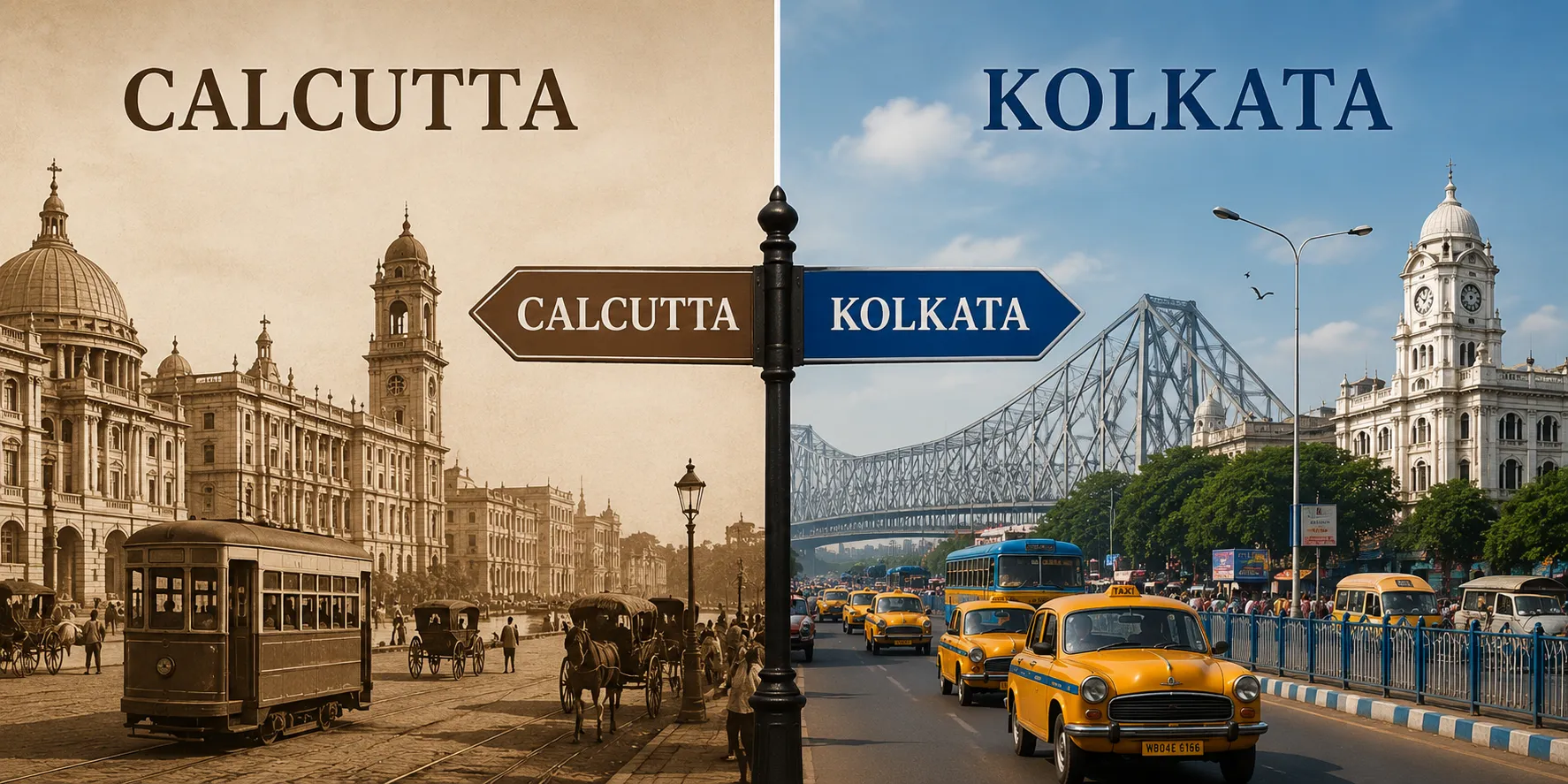
Reason for the Change
The name was changed for several reasons.
-
To reflect the city's original Bengali pronunciation.
-
To strengthen the city's cultural and linguistic identity.
-
To reduce the influence of the colonial English spelling introduced during British rule.
-
To align the official English name with the name long used by local residents.
This was part of a broader trend in India where several cities adopted names closer to their native languages and historical identities.
Historical Background
The history of Kolkata stretches back several centuries.
-
The modern city developed from the villages of Kolikata, Sutanuti, and Govindapur.
-
In the late 17th century, the British East India Company established a trading settlement in the region.
-
During British rule, Calcutta became one of the most important cities in the British Empire and served as the capital of British India until 1911, when the capital was moved to New Delhi.
-
Over time, the city became a major center for education, literature, science, art, commerce, and the Bengal Renaissance.
-
On 1 January 2001, the official English name changed from Calcutta to Kolkata.
Related Name Changes
Kolkata is one of several Indian cities whose official English names have been changed to better reflect local pronunciation or historical identity.
| Old Name | New Name | Year |
|---|---|---|
| Calcutta | Kolkata | 2001 |
| Bombay | Mumbai | 1995 |
| Madras | Chennai | 1996 |
| Bangalore | Bengaluru | 2014 |
| Allahabad | Prayagraj | 2018 |
| Gurgaon | Gurugram | 2016 |
These changes generally aimed to recognize indigenous languages, historical heritage, and local cultural identity.
Common Misconceptions
"Calcutta and Kolkata are two different cities."
No.
They are the same city. Only the official English name changed from Calcutta to Kolkata in 2001.
"The city was renamed because it was newly established."
Incorrect.
Kolkata has existed for centuries. The name change reflected its historical Bengali pronunciation rather than the creation of a new city.
"Changing the name changed Kolkata's culture."
Not really.
Cities naturally evolve over time. Modern Kolkata is more urbanized, technologically advanced, and globally connected than it was decades ago. Many aspects of daily life, architecture, food habits, and lifestyles have changed with modernization. However, the city's cultural identity remains remarkably strong. Festivals such as Durga Puja continue to be celebrated with extraordinary enthusiasm, artistic creativity, and community participation. The tradition of neighborhood pandals, cultural performances, family gatherings, and public celebrations remains one of Kolkata's defining characteristics, preserving the spirit that has long been associated with the city even as it continues to grow and modernize.
Frequently Asked Questions (FAQs)
1. What was Kolkata's old name?
Kolkata was officially known as Calcutta until 2001.
2. Why was Calcutta renamed Kolkata?
The name was changed to match the original Bengali pronunciation and better represent the city's historical and cultural identity.
3. When did Calcutta become Kolkata?
The official name change took effect in 2001 under the West Bengal Capital City (Change of Name) Act, 2001.
4. Is Calcutta still used today?
Yes.
Although Kolkata is the official city name, some long-established institutions, such as the Calcutta High Court and Indian Institute of Management Calcutta (IIM Calcutta), continue to use the historic name.
5. Why is Kolkata called the "City of Joy"?
The nickname reflects the city's vibrant culture, literature, arts, festivals, hospitality, and resilient spirit. It also became internationally popular through Dominique Lapierre's book City of Joy.
The old name of Kolkata was Calcutta, an English form that remained the city's official name until 2001, when it was changed to Kolkata to reflect its authentic Bengali pronunciation and cultural heritage. While the name changed, the city's historical significance and cultural legacy have continued uninterrupted. Kolkata has modernized over the years, and like every major metropolitan city, its lifestyle and urban landscape have evolved. Yet its soul remains deeply connected to its traditions. Whether it's the grandeur of Durga Puja, the city's love for literature, music, theatre, football, or its famous street food and intellectual culture, Kolkata continues to preserve the heritage that has defined it for generations while embracing the future.
Must Read: Name the oldest mountain range of India?