


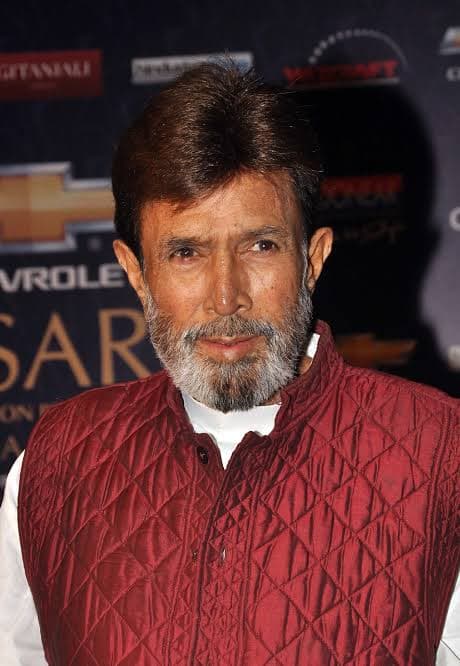
Rajesh Khanna, frequently referred to as the "First Superstar" of Indian film, was an incredible entertainer, filmmaker, and lawmaker. Brought into the world on December 29, 1942, in Amritsar, Punjab, India, as Jatin Khanna, he rose to unrivaled notoriety and accomplishment during the last part of the 1960s and mid-1970s. Rajesh Khanna's commitment to Indian film made a permanent imprint, and he remained a notorious figure throughout the entire existence of Bollywood.
Early Life and Passage into Movies:
Rajesh Khanna had a place with a family with a solid association with media outlets. His folks, Lala Hiranand and Chandrani Khanna, were associated with the film. Notwithstanding his initial desire to turn into a pilot, Rajesh Khanna ultimately floated towards acting.
He made his acting presentation in the movie "Aakhri Khat" (1966), coordinated by Chetan Anand. While the film didn't launch him to prompt fame, it denoted the start of a profession that would before long rethink the scene of Indian film.
Forward Leap and Fame:
Rajesh Khanna's advancement accompanied the movie "Aradhana" (1969), coordinated by Shakti Samanta. The film was a monstrous achievement and Rajesh Khanna's depiction of the person Arun Verma hit home for crowds. The tunes, particularly "Simple Sapno Ki Rani," became chartbusters, adding to the film's gigantic prevalence.
Following "Aradhana," Rajesh Khanna conveyed a series of hits that laid him out as the supreme hotshot of the Indian entertainment world. Films like "Safar" (1970), "Anand" (1971), "Bawarchi" (1972), and "Namak Haraam" (1973) displayed his adaptability as an entertainer. His on-screen science with driving entertainers of the time, including Sharmila Tagore and Mumtaz, became notorious.
Remarkable Achievement:
Rajesh Khanna's prevalence reached phenomenal levels during the mid-1970s. His capacity to depict heartfelt characters with profound profundity resounded with crowds the nation over. His brand name style, including the well-known gesture of the head and the discourse conveyance, became inseparable from his on-screen persona.
The year 1971 was especially noteworthy for Rajesh Khanna, as he conveyed a record-breaking number of continuous hits. The movies "Haathi Simple Saathi," "Anand," "Amar Prem," and "Bawarchi" cemented his status as the undisputed genius of Bollywood. The expression "Rajesh Khanna Craziness" was authored to portray the furor and idolization he got from fans.
The "Superstar" Peculiarity:
Rajesh Khanna's prosperity prompted the development of the expression "Bollywood Superstar," a title that he legitimately procured. Fans would crowd outside his home, and his prevalence reached out past the boundaries of India. The peculiarity of Rajesh Khanna was described by a remarkable association with the crowd, and his movies frequently portrayed the evolving socio-social scene of the time.
Difficulties and Progress:
Be that as it may, as the 1970s advanced, Rajesh Khanna confronted proficient difficulties with the development of new entertainers and changing crowd inclinations. Despite conveying a few prominent movies like "Avishkaar" (1973) and "Choti Bahu" (1971), the idea of the business was developing. His strength started to wind down, yet his effect on Indian film stayed perseverant.
Later Vocation and Individual Life:
Rajesh Khanna kept on acting in films all through the 1970s and 1980s, although the recurrence of hits diminished. A portion of his eminent later movies incorporates "Amardeep" (1979), "Dard" (1981), and "Avishkaar" (1973). He additionally wandered into film creation with films like "Alag" (1985).
In his own life, Rajesh Khanna married Dimple Kapadia in 1973. The couple had two little girls, Sparkle Khanna and Rinkie Khanna. In any case, their marriage confronted difficulties, and they at last became isolated.
Political Undertakings:
In the last option part of his life, Rajesh Khanna entered into governmental issues. He won the Lok Sabha political race from the New Delhi voting public in 1992 as an autonomous up-and-comer upheld by the Congress party. Be that as it may, his political profession didn't accomplish a similar degree of progress as his acting vocation.
Inheritance and Acknowledgment:
Rajesh Khanna's commitment to Indian film earned him various awards and praises. He got a few Filmfare Grants for his exhibitions, including the Filmfare Lifetime Achievement Grant in 2005. In 2013, he was post-mortem granted the Padma Bhushan, quite possibly India's most noteworthy non-military personnel honor.
End:
Rajesh Khanna, the first "Bollywood Superstar," left a permanent engraving on the true-life scene of India. His effect on the business, particularly during the pinnacle of his profession, is unmatched. Rajesh Khanna's capacity to associate with crowds, his magnetic screen presence, and his depiction of vital characters have guaranteed his perseverance through his heritage in the archives of Bollywood history. Indeed, even a long time after his elapsing in 2012, Rajesh Khanna's movies keep on being praised, and his commitments to Indian film are recollected with love.
Also Read :- Who is Akshay Kumar?