Advertisement

Advertisement banner

Advertisement

Advertisement banner

Advertisement

Advertisement banner
R
Oct 13, 2023education

Who was tipu sultan?

5 Answers
0

S
@soniyakumari4008Mar 31, 2022

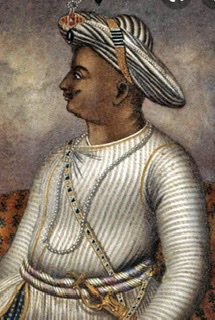
Born on 20th November 1750 at Devanahalli,Tipu Sultan was a great ruler of Mysore.He was also known as the Tiger of Mysore.His full name was Fateh Ali Sahab Tipu.In the year 1782 & 1784 Tipu succeeded in the war with his father & won the title of Sultan of Mysore.On 4th May 1799,Tipu got defeated & was killed by the British East India Company forces in the fourth Anglo Mysore war.Mausoleum of Tipu Sultan,Srirangapatna is his place of burial.

Article image

4
0
avatar
@rushikajhathi8189Apr 4, 2022

Tipu Sultan was born November 20, 1750. He is is memorable for many anministartions innovations when he was ruling which includes a new land revenue system that started the growth of silk industry in maysore. He had four swords which were precious and now are kept in museum of London. Tipu is knows as first freedom fighter and has contributed a lot for the nation. Tipu Sultan musdered tiger and is known as tiger of Mysore.

Article image

1
0
V
@vikusingh1788Oct 11, 2023

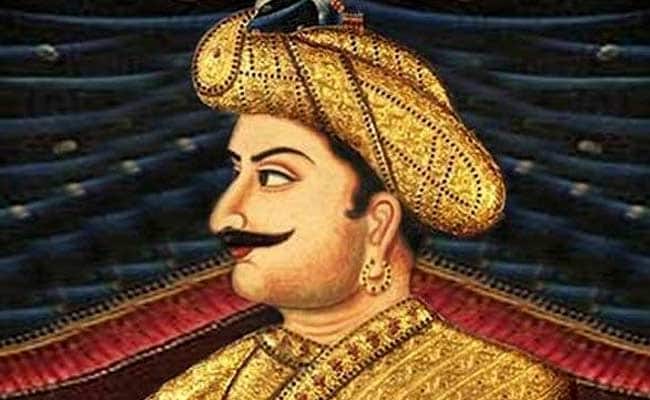
Tipu Sultan (1751-1799), also known as the Tiger of Mysore, was the ruler of the Kingdom of Mysore in southern India from 1782 to 1799. He was a skilled military tactician and strategist who fought four wars against the British East India Company. He was also a patron of the arts and sciences, and made significant contributions to agriculture, industry, and trade.

Tipu Sultan was born into a military family and trained in warfare from a young age. He first accompanied his father, Hyder Ali, to battle at the age of 15. He quickly rose through the ranks of the Mysore army and became a trusted commander. In 1782, he succeeded his father as the ruler of Mysore.

Tipu Sultan was a staunch opponent of British colonialism. He fought four wars against the British East India Company, the first of which he won. However, he was ultimately defeated in the Fourth Anglo-Mysore War in 1799 and was killed in battle.

Despite his defeat, Tipu Sultan remains a revered figure in India. He is seen as a hero of resistance to British colonialism and a pioneer of modern warfare. He was also a progressive ruler who made significant contributions to the development of Mysore.

In addition to his military and political achievements, Tipu Sultan was also a patron of the arts and sciences. He established libraries, schools, and mosques throughout Mysore. He also supported artists, writers, and poets. He was particularly interested in science and technology, and he introduced a number of innovations to Mysore, such as the use of rockets in warfare and the cultivation of new crops.

Tipu Sultan was a complex and controversial figure. He was a brilliant military strategist and a progressive ruler, but he was also known for his ruthlessness and intolerance. His legacy remains contested today, but there is no doubt that he was one of the most important figures in Indian history.

Letsdiskuss

Also Read- What are the things the people generally don-t know about Tipu Sultan?

0
0
avatar
@nehagoyal8566Oct 12, 2023

Tipu Sultan Was born on November 20, 1750.Tipu ruled the kingdom of Mysore, which he inherited from his father Haidar Ali.He is remembered by many in India and Pakistan as a heroic freedom fighter and warrior-king.He is known as "Tiger of Mysore," He was the last ruler in India strong enough to dictate terms to the British East India Company.He fought First Anglo-Mysur War,Second Anglo-Mysur War,Third Anglo-Mysur War,Fourth Anglo-Mysur War.Despite two victories over the British, Tipu Sultan realized that the British East India Company remained a serious threat to his independent kingdom. He financed ongoing military progress, which involved the extended refinement of the renowned Mysore rockets - iron cylinders capable of launching projectiles up to a distance of two kilometers, instilling fear in British troops and their associates.Tipu also built roads and encouraged silk production for international trade.Tipu Sultan is known for his bravery and skills.

Letsdiskuss

0
0
avatar
@mohdsameer9331Oct 12, 2023

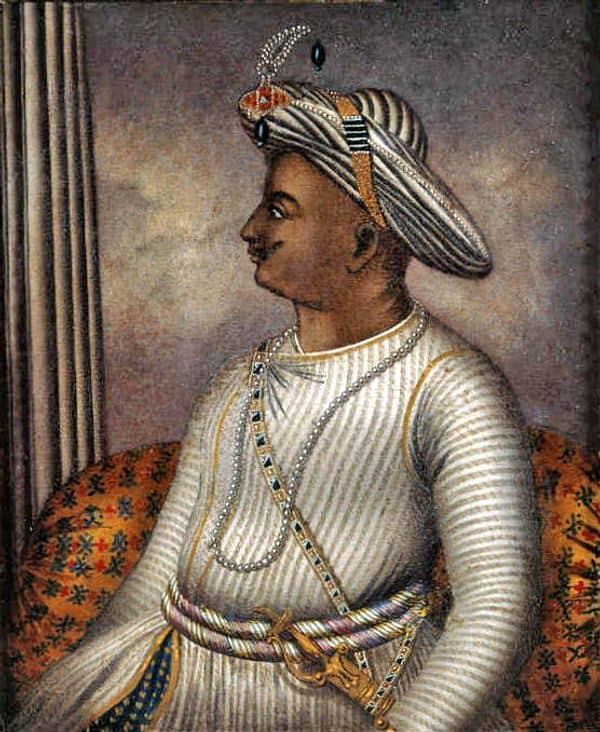
Tipu sultan, otherwise called the Tiger of Mysore, was a conspicuous ruler and military planner in South India during the late eighteenth hundred years. Brought into the world on November 20, 1750, in Devanahalli, Karnataka, Tipu sultan was the oldest child of King Hyder Ali, who was the leader of the Realm of Mysore around then. Tipu Ruler rose to the privileged position after his dad's passing in 1782 and managed until his own downfall in 1799.

Tipu sultan is associated with his bold obstruction against English imperialism in India. He eagerly went against English expansionism and battled a few fights the East India Organization, which was consistently dealing with different districts in India. Tipu sultan's tactical ability and inventive techniques made him an imposing rival for the English powers.

One of the main fights battled by Tipu sultan was the Fourth Somewhat English Mysore War (1798-1799). In this conflict, Tipu sultan aligned with the French and looked for their help to counter the English powers. Nonetheless, because of different political and vital reasons, the French help didn't appear true to form. Notwithstanding confronting monstrous difficulties, Tipu sultan showed noteworthy boldness and administration during the conflict.

The Fourth Somewhat English Mysore War finished in the Attack of Srirangapatna, the capital of the Realm of Mysore. The English powers, drove by Broad Sir David Baird and General Harris, laid attack to Srirangapatna in April 1799. After a savage fight, the post was penetrated, and Tipu Ruler was killed on May 4, 1799. His demise denoted the conclusion of a significant time period and the destruction of the Realm of Mysore.

Tipu sultan's rule was described by his endeavors to modernize the organization and military of Mysore. He presented a few changes in regions like tax collection, horticulture, industry, and training. Tipu sultan was a supporter of human expression and empowered the improvement of writing, verse, and design in his realm. He likewise cultivated exchange relations with different nations, including France, Iran, and Turkey.

Tipu sultan's opposition against English imperialism and his endeavors to maintain the sway of his realm have made him an image of hostile to provincial battle in India. He is venerated as a public legend in Karnataka, where he is commended for his boldness and positive energy. Notwithstanding, conclusions about Tipu sultan's standard are separated, with a few review him as a political dissident and others censuring his strategies and techniques.

All in all, Tipu sultan was an impressive ruler who boldly battled against English expansionism in India. His tactical ability, imaginative techniques, and endeavors to modernize his realm make him a significant figure in Indian history. Tipu sultan's heritage proceeds to move and light conversations about the intricate elements of expansionism and obstruction.

Article image

0
0