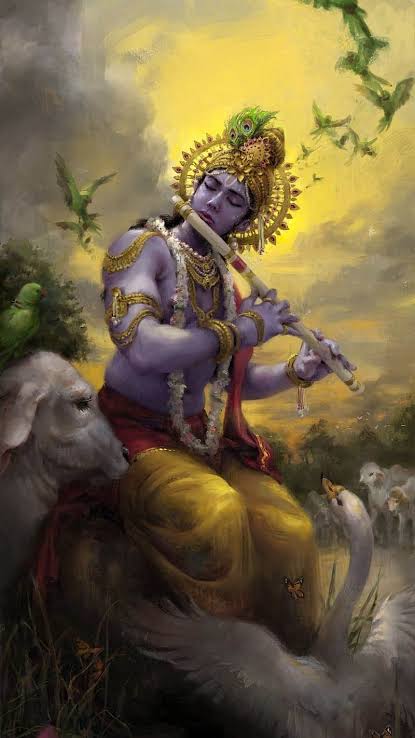

One of the most recognizable images of Lord Krishna is his graceful pose while playing the flute, with one leg crossed in front of the other. This posture is known in many devotional traditions as the Tribhanga pose, which means "three bends."
What Is the Tribhanga Pose?
The word Tribhanga comes from Sanskrit and means "three bends."
In this posture:
-
The neck is slightly bent.
-
The waist is gently curved.
-
One leg crosses in front of the other.
This creates a flowing, elegant stance that is commonly seen in Krishna's idols and paintings.
Symbol of Divine Beauty
According to Hindu traditions, Krishna is considered the embodiment of beauty, love, and joy.
The crossed-leg posture symbolizes:
-
Grace
-
Charm
-
Elegance
-
Divine attraction
Artists and sculptors often depict Krishna in this pose to reflect his enchanting personality.
Connection with the Flute
Krishna is frequently shown playing his flute while standing with crossed legs.
According to devotional beliefs:
-
The flute represents divine music.
-
The pose represents relaxation and bliss.
-
Together they symbolize harmony between God and creation.
This image is especially associated with Krishna's time in Vrindavan among the gopis and cowherds.
Symbol of Detachment
Some spiritual teachers interpret Krishna's crossed-leg posture as a symbol of living in the world without being attached to it.
The message is that a person can:
-
Fulfill responsibilities
-
Enjoy life
-
Remain spiritually balanced
Krishna's stance is seen as effortless, suggesting complete inner peace.
Representation of Joy and Playfulness
Unlike many deities who are shown in rigid or formal positions, Krishna is often depicted in a relaxed and playful manner.
According to me, the crossed-leg pose reflects:
-
Happiness
-
Freedom
-
Divine play (Leela)
-
Love for music and dance
It helps devotees connect with Krishna as a loving and approachable deity.
Influence on Indian Art
The Tribhanga posture has influenced:
-
Temple sculptures
-
Classical dance forms
-
Paintings
-
Religious art
Many Indian classical dance styles use similar poses inspired by Krishna's graceful stance.
Lord Krishna's crossed-leg posture is much more than an artistic choice. It symbolizes beauty, joy, balance, divine love, and spiritual freedom. The pose reminds devotees that life can be lived with grace and happiness while remaining connected to higher spiritual values. This is why Krishna is almost always depicted standing with crossed legs and a flute in his hands—a timeless symbol of divine charm and inner bliss.
Must Read: According to Hinduism, why Lord Krishna married Tulsi Devi?